The Hall of Paleontology and Archeology consists of two complexes: paleontological and archaeological. This principle of organization of the exhibition space is due to the interdependence and interconnectedness of two fundamental principles – natural and anthropogenic in the racial and genetic and social history of mankind.
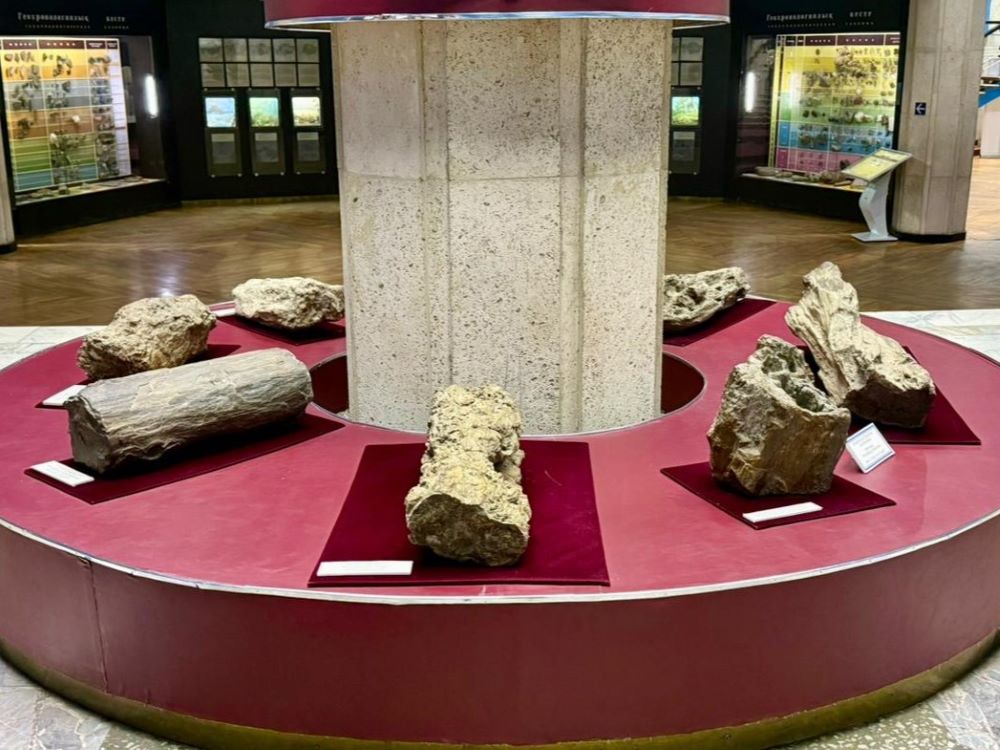
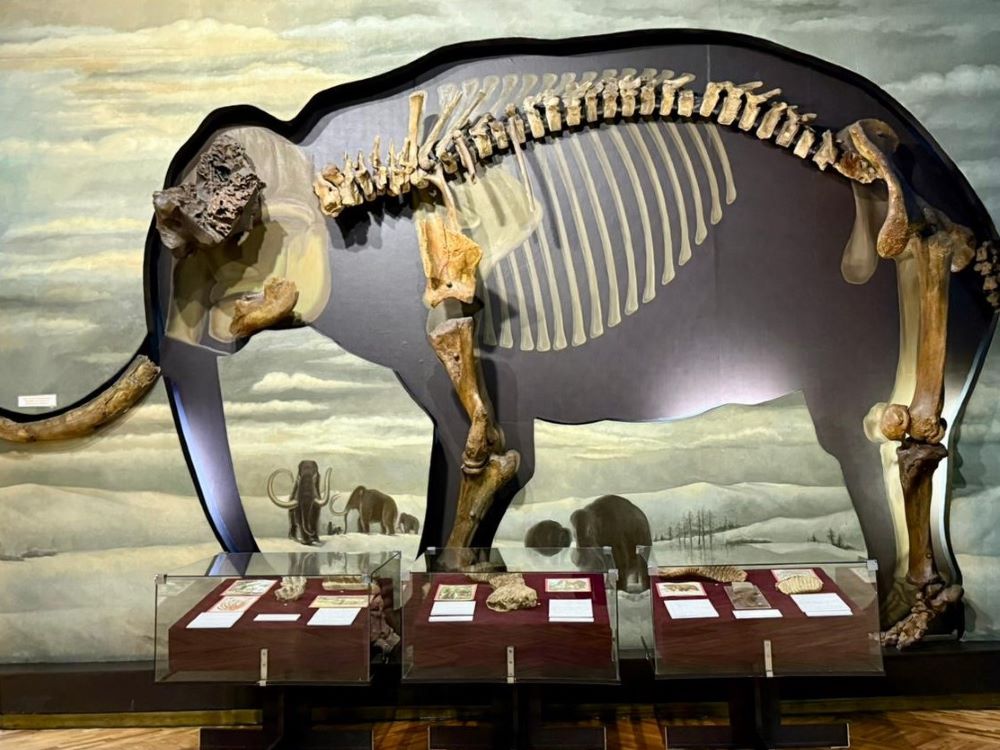
The Paleontological section of this first hall is represented by rich osteological (osteology, the study of bones) material, fragments of fossilized wood, imprints of insects and fish, microscopic spores and pollen from plants. The majority of the exhibition is millions of years old.
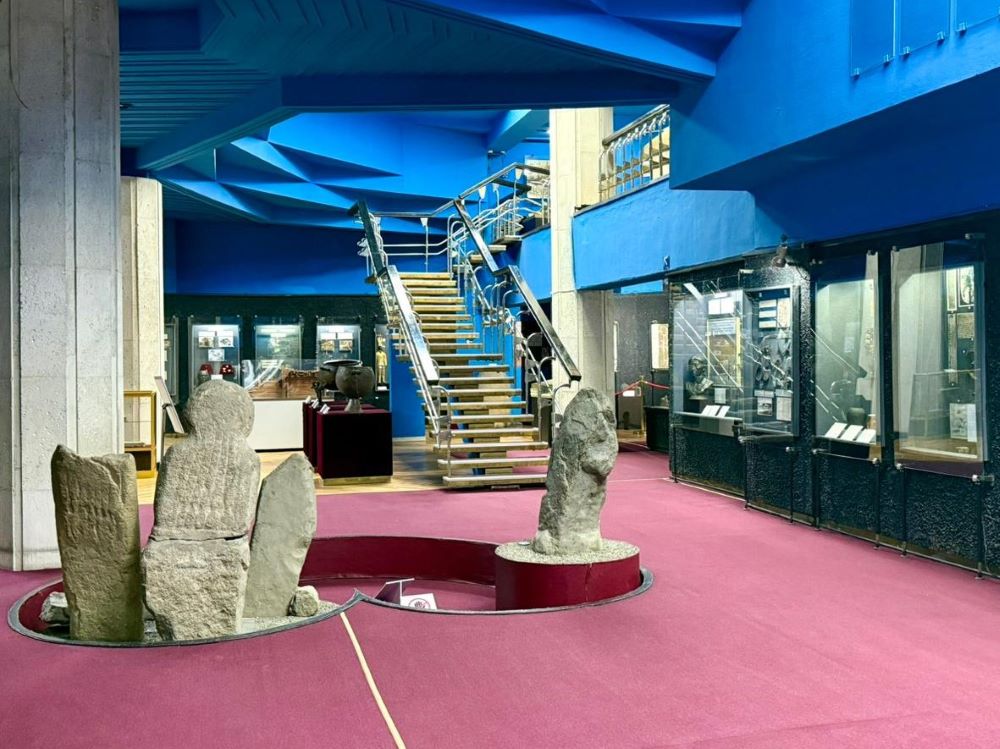
The archaeological exhibition is composed of sections: the Stone Age, the Bronze Age, the early Iron Age, the Hun-Sarmat periods and the Middle Ages. The exhibitions are displayed in a thematic and chronological order on the two levels of the room. The beginning of the exhibition is devoted to questions of the origin and development of man. In the last 15 years there has been a real “breakthrough” in paleoanthropology. A number of new branches of the evolutionary tree of hominids were opened, which was more extensive than previously thought. It is now became known that the evolution of hominids was not linear; it was more bush-like pattern. In many cases existed simultaneously three, four kinds of hominids and can be even more including the same area. The current situation, where there is only one species of Homo sapiens is not typical. It has developed relatively recently. 40-50 thousand years ago on the ground at the same time there evidently as many as four types of people: modern man, Neanderthal, relic erectus in East Asia and a pygmy people from the island of Flores. There is reason to believe that reducing the diversity of hominids was due to competitive displacement of archaic species by more advanced, and in the first place by modern man. The next section of the exhibition includes archaeological artifacts discovered in the territory of Kazakhstan as a result of numerous archaeological expeditions, reflecting the history of our country from the Palaeolithic Age. Copies of the most valuable archaeological finds are displayed, including the ‘Golden Man’ from the Issyk kurgan, unique ancient gold articles from the Kargaly and Zhalauly treasures, reconstructions of ancient burial structures and farming constructions, models of medieval architecture and colorful dioramas of the Earth history.
Medieval nomads, the Turks inherited their descendants with the beautiful stone sculptures, military attributes: horn bows, arrowheads, spears, armor, belt bronze plaques and bronze pommel whip with a wolf’s head.
Urban culture of 10th-12th centuries in the classical system of services – ward with shops of potters, blacksmiths, jewelers, with water supply system and drainage were displayed. Since 6thc. AD, on the territory of South Kazakhstan and Zhetisuthe Silk Road passed. Import items were exhibited: a fragment of copper Iranian dish, Chinese porcelain, a unique piece of porcelain bowl from Japan, silver dish and a pitcher.
To the scientific and archaeological reconstructions (installed in the lobby) – reconstruction of archeologically significant syncretic collective images of the ancient inhabitants of Kazakhstan: “Costumes and accessories of woman of Andronovo Culture. 17th-12th centuries BC”(author K.Akishev),” Golden Man. 4th-3rd centuries BC “(on the new version of A.K.Akishev produced by K.Altynbekov)”, “Weaponry and clothes of nobleXiongnu (Hun) warrior. 2nd c. BC –1st century AD”(author A.N.Podushkin) and are of special interest.