Ethnographic collection
The museum holds a unique ethnographic collection of more than 24,000 items, assembled over the entire history of the museum. Most of the collection dates from the XIX–XX centuries, though some pieces date to the second half of the XVIII century. Together, these objects offer a comprehensive picture of the everyday life and culture of the Kazakh people, and many are considered historical and cultural rarities.
Carpets and Felt Goods
The carpet and felt collection includes traditional felt items used in home furnishing and domestic life: syrmak, tekemet, otkiiz, shaikiiz, atzhabu, asmaldyk «tuiezhabu», bota zhabu, and zhainamaz, along with woven items such as korzhyn, kerme, kilem «carpet», alasha, and teng «boghzhama».
The collection also includes elements of yurt decoration — uzik, tuyrlyk, tundik, irge kiiz, shym esik, and shymshy — as well as items of decorative and applied art such as reed mats, tapestries, and wall panels.
Carpets are divided into pile and pileless types, each further classified by ornamental design: shatyrgul kilem, samauyrgul kilem, adai kilem, and sharshy kilem among the pile carpets; araby kilem, orama kilem, takta kilem, beskeste kilem, and bodnos kilem among the pileless carpets.
Household and domestic items include korzhyn, kerme, zhainamaz, karshyn, teng «boghzhama», atzhabu, baskur, bau, ainakap, and dorba, while items used specifically for household purposes include ainakap, ayakkap, otkiiz, shaikiiz, zhainamaz, tutkysh, bota zhabu, asmaldyk «tuiezhabu», and atzhabu.
The museum’s ethnographic collection was assembled by museum staff through expeditions carried out across the regions of Kazakhstan, as well as in neighbouring countries with Kazakh communities — Karakalpakstan, Turkmenistan, Turkey, Mongolia, and China. Part of the collection was donated by private individuals.
Clothing Collection
The museum holds an extensive collection of clothing and textiles, numbering more than 3,000 items. The core of the collection consists of pieces received from the Orenburg and Zhetysu museums, together with material gathered in preparation for the Decade of Kazakh SSR Art and Literature held in Moscow in 1958.
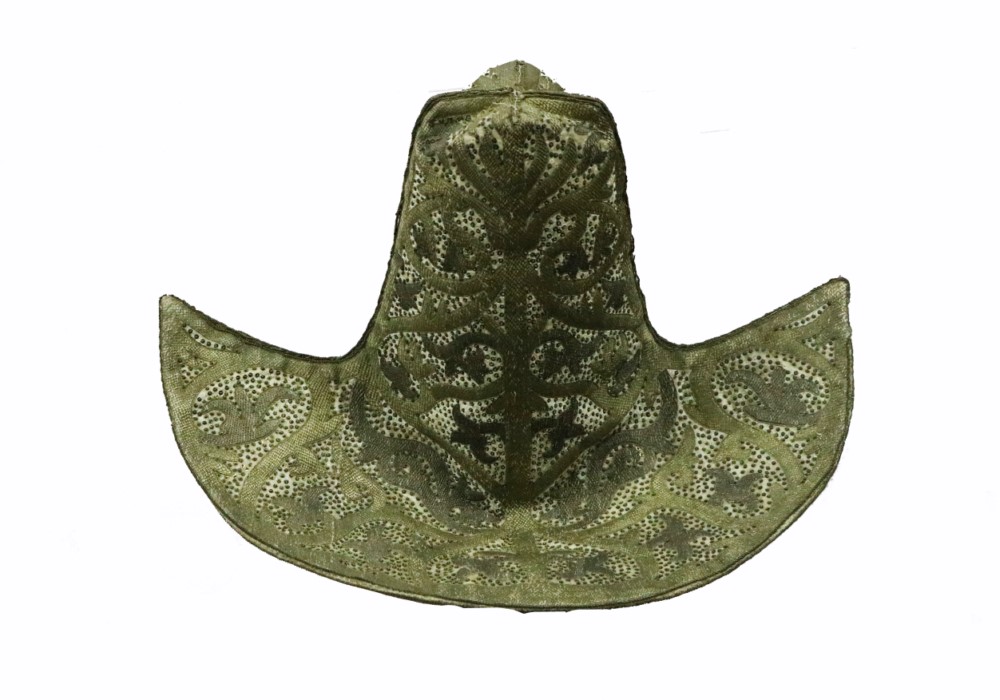
The collection includes examples of traditional Kazakh dress, theatrical costumes, clothing of the various ethnic groups living in Kazakhstan, as well as textiles and embroidery samples.
The items in the collection were gathered from every region of Kazakhstan, as well as from neighbouring countries — Turkmenistan, Karakalpakstan, Mongolia, and China.
Precious Metal Jewellery Collection
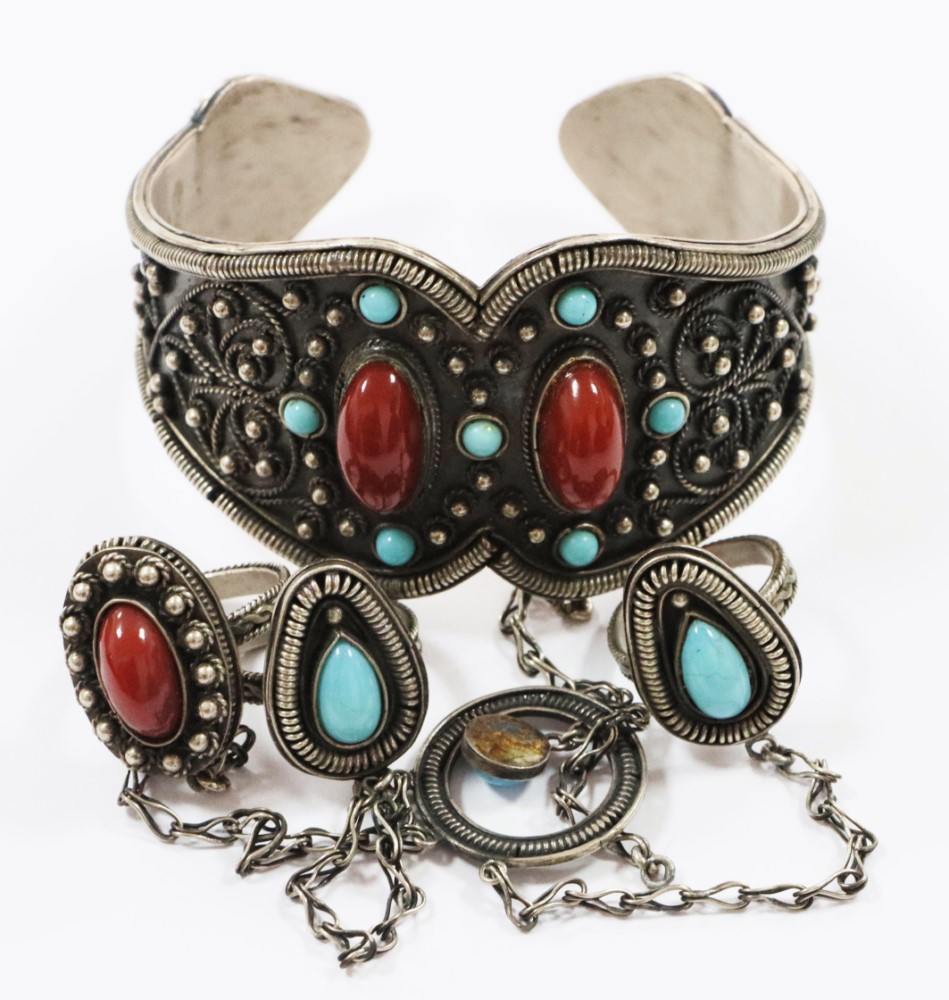
The precious-metal jewellery collection holds a large number of pieces from the XVIII to early XX centuries, representing all regions of Kazakhstan. The collection numbers more than 14,000 items and includes the following types of jewellery:
- headdress and hair ornaments for the saukele bridal headdress — saukele decorations, shekelik — as well as hair-braid ornaments: shashbau, sholpy, and shashtenge;
- chest ornaments «onirzhiek» and additional clothing and headwear accessories — necklaces «alka», amulet cases and amulets «tumarsha, boitumar, tumar», clasps and fasteners «kapsyrma», and protective talismans «ukiayak»;
- brooches, buttons, and decorative plaques «kapsyrma, tuime, tana»;
- toothpicks and ear-cleaning implements «tis shukygysh and kulak tazalagysh»;
- rings «zhuzik, sakina»;
- bracelets «bilezik»;
- belts «beldik»;
- jewellery of other ethnic groups — Uighur, Turkmen, and Dungan.
Horse Tack
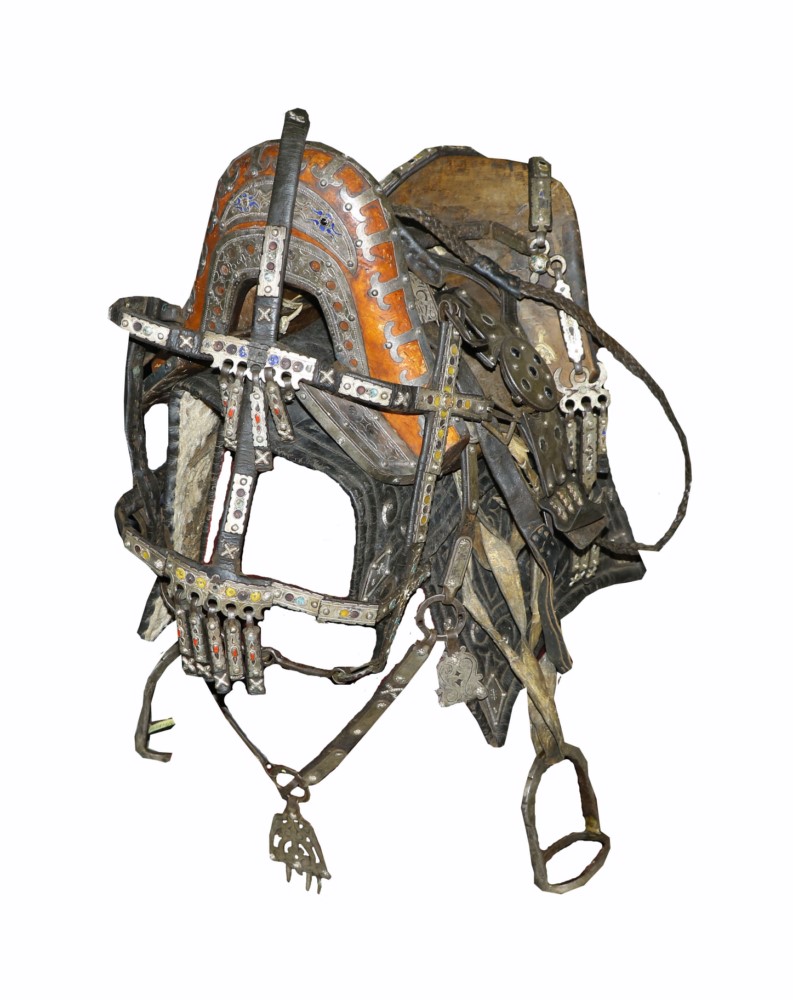
The items in this collection are notable for their great variety, richly decorated surfaces, uniqueness, and widespread use in traditional life. Most pieces were made by folk craftsmen in the late XIX and early XX centuries.
The saddles and horse tack in the collection were not mass-produced, but were, as a rule, made to individual order. Kazakh saddles vary by region and clan affiliation and include such types as kokan er, kazaky er «naiman er», shoshakbas er, and uirekbas er, among others.
The main decorative elements are silvered metal plates and silver plaques of various shapes. Craftsmen used a range of artistic and technical methods in their production, including forging, casting, openwork carving, silver inlay «appliqué», profiling, engraving, chasing, niello work, enamel, and inlay with coloured stones and glass.
Weapons and Protective Armament Collection
The weapons and armour collection is divided into several main groups:
- edged weapons: quivers, bows, arrows, bullets, spears, arrowheads, battle axes, maces, clubs, daggers, knives, swords, and sabres, including weapons used by other peoples;
- protective armour: helmets, mirror armour, body armour, and shields;
- military equipment: rockets, artillery pieces, bullet-casting moulds, pistols, Kazakh firearms, and firearms of other peoples.
The museum holds rare and unique examples of Eastern weaponry and defensive armour. Of particular value is a rare example of Kazakh protective armour — the mirror armour of Arystan Aichuvakov, Sultan of the Junior Zhuz. Unique in its construction and form, this piece consists of five metal plates joined by straps. The front surface of the plates is decorated with engraved ornament and verses from the Quran.
The collection also includes a quiver from the second half of the XIX century that belonged to Sultan-ruler Baimukhamed Aichuvakov, as well as a pistol belonging to Sultan Mukhamedzhan Baimukhamedov.
A substantial part of the collection consists of weapons and military equipment from the Great Patriotic War, including captured weapons of the 8th Guards Panfilov Division, which have become relics of the military honour of the people of Kazakhstan.